
The most studied skin-repair molecule sold across Manila does not come from a laboratory. It comes from salmon. More exactly, from the DNA inside salmon, purified into short fragments and used to coax tired skin into repairing itself.
That molecule is PDRN, and PDRN in the Philippines now sits on almost every clinic menu, usually under the friendlier name “salmon DNA” or “skin booster.” The marketing is louder than the science. Here is what PDRN actually is, what it does, who it suits, and how we use it safely at VMA.
What PDRN in the Philippines actually is
PDRN stands for polydeoxyribonucleotide, which is a long word for short chains of DNA. The DNA is taken from salmon and purified until almost no protein is left, so your body reads it as a repair signal and not as a threat. That purity is the whole point. It is what lets a fish molecule speak to a human cell. PDRN has been studied for more than two decades, and a review of that work credits two linked actions: it switches on the adenosine A2A receptor and it feeds a salvage pathway, while it calms inflammation and improves blood supply (Galeano and colleagues, Pharmaceuticals, 2021).
Start with the receptor. Adenosine A2A sits on the surface of fibroblasts (the cells that make collagen). When PDRN switches it on, fibroblasts multiply and produce fresh collagen I and III, the proteins that keep skin firm and elastic. Park and colleagues traced this same A2A-dependent path and saw PDRN drive fibroblast growth, type I collagen, and new blood vessels in human skin cells (Archives of Dermatological Research, 2025).
The salvage pathway is the second action, and it is the quietly clever one. PDRN breaks down into nucleotides (the small units that make up DNA), and a repairing cell reuses them directly instead of making each one from scratch. So PDRN does two jobs at once. It signals the cell to repair, and it hands the cell the parts that repair needs.
There is a third effect that patients feel before they see anything. PDRN calms two of the messengers that drive redness and aging, TNF-alpha and IL-6, and it nudges the skin to grow new microvessels through a signal called VEGF. Less inflammation, and better blood supply to feed new collagen. The skin settles out of a stressed state and back into a repairing one.

What PDRN actually does, and what it does not
PDRN repairs. It does not fill, and it does not freeze. This is the line patients most often blur. A filler adds volume under a wrinkle. A neurotoxin like Botox or Xeomin relaxes the muscle that folds the skin. PDRN does neither. It works on the quality of the skin itself, from the inside, over weeks.
What that looks like in practice is steady, undramatic improvement: better hydration and a little more bounce, with fine lines softening as the skin beneath them grows healthier. Healing speeds up after a laser or a peel, and skin that flushes easily tends to settle. None of it arrives overnight, because real collagen takes weeks to form.
One honest correction worth making early. PDRN is not a whitening drip and it is not a bleaching agent. It can make pigmented, irritated skin look more even because it lowers inflammation, but it does not lighten your natural color. If a clinic sells salmon DNA as a whitener, the science has left the room.
Is PDRN the same as Rejuran?
Almost, and the difference is worth knowing. Rejuran is a brand, made in Korea, and PDRN is the molecule underneath it. Some branded products use slightly longer chains and call them polynucleotides, or PN, but the family and the mechanism are the same repair story. When a clinic in the Philippines says Rejuran, salmon DNA, or PDRN, they are pointing at closely related members of one family. Ask which exact product is being used, and ask to see it.
Who PDRN is for
PDRN in the Philippines suits skin that looks tired and depleted, the kind that has lost a little firmness but has not truly sagged. Dullness, early fine lines, poor texture, slow healing, lingering redness, thinning skin in the thirties and forties. It is gentle enough for sensitive and reactive skin, which is one reason we reach for it often. It is also a strong recovery tool after lasers and microneedling, because it speeds the skin back to calm.
It is not for everyone, and saying so is part of the job. We wait if you are pregnant or breastfeeding, because the data there is thin. We wait if the skin is mid-breakout or actively infected at the treatment site. We take a careful history if you have a true fish or salmon allergy. And if your goal is added volume or a smoothed-out frown line, PDRN is the wrong tool, and we will tell you which one is right instead.
How a session at VMA runs
It starts with a real consultation. History, medications, past reactions, and a proper look at your skin decide whether PDRN fits before anything is opened.
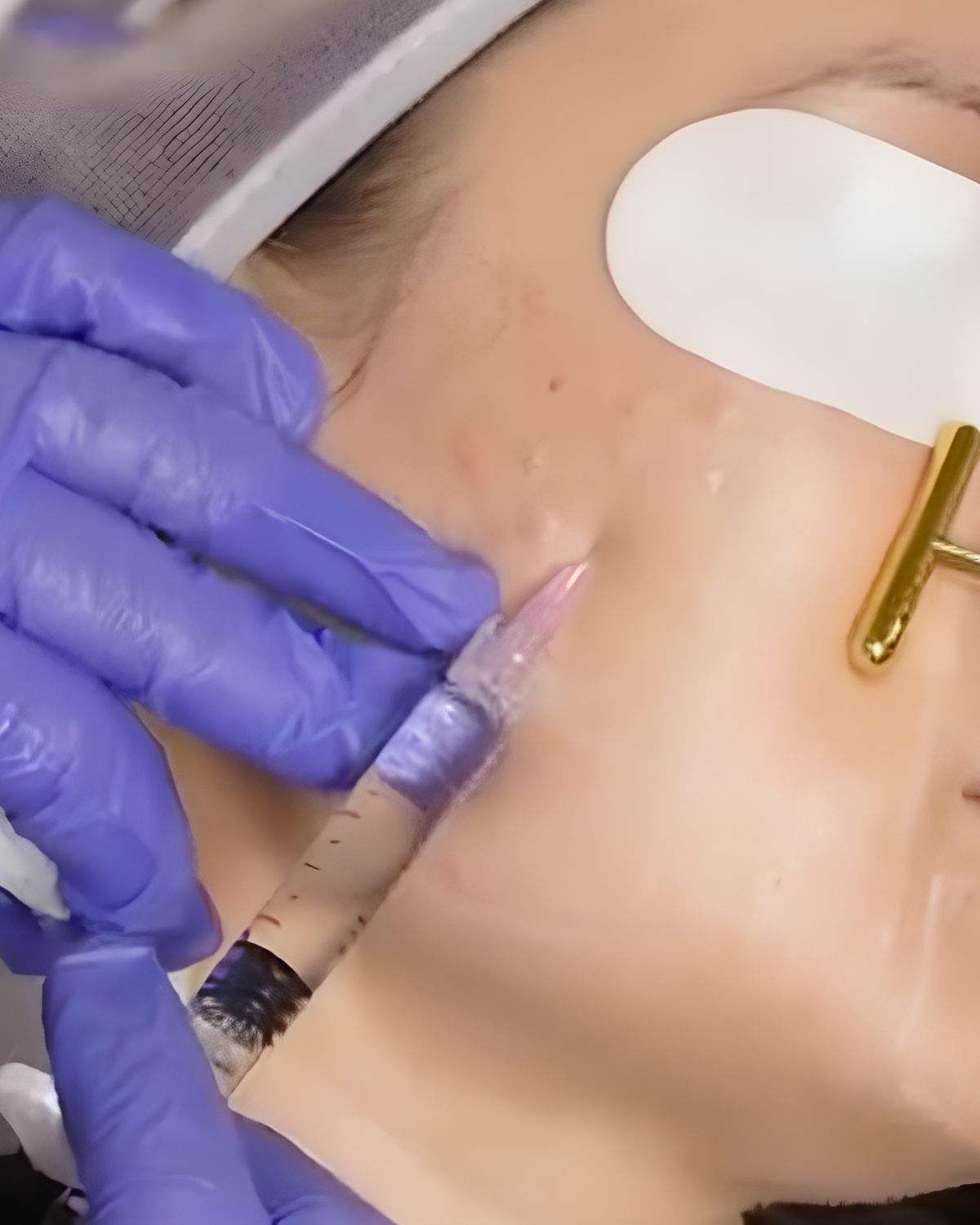
On treatment day we numb the skin with a topical cream. The PDRN is then delivered into the upper layers, either through fine microneedling or through small injections, depending on your skin and your concern. The session runs about thirty to sixty minutes. You leave with mild redness and sometimes a few tiny bumps that settle within a day or two.
PDRN is a course of treatments. Most people do three to four sessions spaced a few weeks apart, then return for maintenance a couple of times a year. The improvement grows across the series as the collagen does. A physician runs every session, and the product is opened in front of you.
How PDRN fits with the rest of our protocols
PDRN is rarely the only thing we do, because repair pairs well with almost everything. It is the core of our PDRN facial in BGC, where we combine it with exosomes for a deeper regenerative effect. We use it to settle and speed recovery after the Hollywood Spectra laser, so pigment work heals cleaner. And it sits comfortably alongside Ultherapy, which tightens the deep tissue with focused ultrasound while PDRN improves the quality of the skin above it. One treatment reaches deep. The other works the surface. Together they cover more than either does alone.
The honest part
Three things every patient considering PDRN should hear before booking.
One. PDRN repairs, and it repairs best when you give it a healthy starting point. Sleep and daily sun protection decide how much of the new collagen you keep. Skip them, and the collagen you paid for quietly slips away.
Two. Authenticity is everything with an injectable. A gray market for salmon-DNA vials exists across the region, and a fake or diluted product wastes your money and risks your safety. Ask whether the product is registered with the Philippine FDA. Ask to watch the sealed vial opened in front of you. A good clinic expects the question.
Three. It works slowly, by design. Anyone who promises a single-session transformation is overselling it. PDRN works at the pace the body actually repairs, which is patient.
If you would like to know whether PDRN in the Philippines is the right fit for your skin, you can book a consultation or read more about our team on the About page. The full menu of services is at velascomedical.com.
For the underlying science, you can browse the peer-reviewed literature on PubMed’s indexed studies on polydeoxyribonucleotide and skin rejuvenation.
This article is educational and is not medical advice. Please consult a qualified physician before starting any aesthetic treatment.
Frequently Asked Questions
Is PDRN in the Philippines the same as Rejuran?
They are close relatives. Rejuran is a Korean brand built on salmon-derived repair material, and PDRN is the molecule underneath it. Some products use slightly longer chains called polynucleotides, but the mechanism is the same. Ask your clinic exactly which product they use and ask to see it opened.
Does PDRN whiten the skin?
No. PDRN is not a whitener or a bleaching agent. It can make irritated, blotchy skin look more even because it lowers inflammation, but it does not lighten your natural skin color. Any clinic selling salmon DNA as a whitening treatment is overstating what it does.
Does PDRN hurt, and what is the downtime?
We numb the skin first, so most people feel pressure more than pain. Afterward you can expect mild redness and sometimes a few tiny bumps that settle within a day or two. Most patients return to normal activity the same day.
Who should not get PDRN?
We wait if you are pregnant or breastfeeding, if your skin is mid-breakout or infected at the treatment site, or if you have a true fish or salmon allergy that needs assessment first. If your goal is volume or relaxing a frown line, a filler or neurotoxin is the better tool.
How do I know the PDRN is authentic in the Philippines?
Ask whether the product is registered with the Philippine FDA, and ask to watch the sealed vial opened in front of you. A gray market for salmon-DNA injectables exists in the region, so verifying the product is part of staying safe. A trustworthy clinic answers both questions without hesitation.
PDRN repairs skin slowly and honestly. Ask your physician whether your skin needs repair, or only rest.
Leave a Reply