
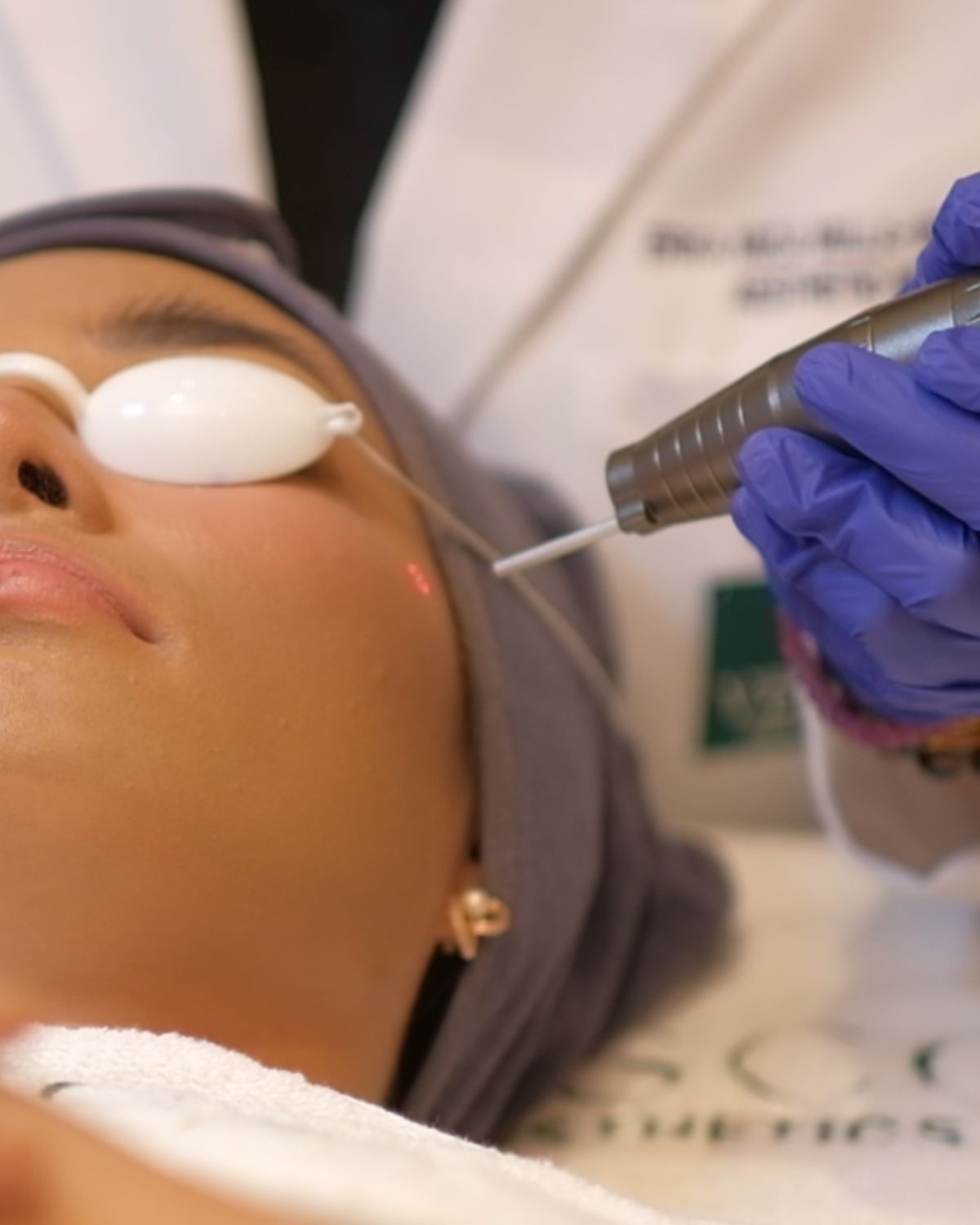
Do you keep getting offered either a laser facial or a peel and cannot tell which one they should be doing? Hollywood Spectra in BGC and chemical peels solve overlapping problems with completely different tools. One is a Q-switched laser. The other is a controlled acid. Both can leave your skin clearer, brighter, and more even. They are not interchangeable, and the wrong choice for your skin type can set you back months.
Here is how Hollywood Spectra in BGC actually compares to a chemical peel, who each one is for, and how I decide which to recommend in clinic.
What Hollywood Spectra in BGC actually does
Hollywood Spectra is a Q-switched Nd:YAG laser. It fires nanosecond pulses of light at two wavelengths: 1064 nanometers, which reaches deeper into the dermis, and 532 nanometers, which targets pigment in the upper skin. The laser does not burn the surface. It selectively shatters melanin clusters and stimulates a controlled wound response in the dermis without ablating the epidermis.
The brand’s signature protocol, the carbon peel or “Hollywood Peel,” applies a thin layer of medical-grade carbon lotion to the skin. The 1064 nanometer laser is then passed across the face. The energy is absorbed by the carbon, which vaporizes along with debris, oils, and the upper layer of dead skin. The result is a visible immediate brightening and a slower, longer-acting collagen response over weeks.
Hollywood Spectra in BGC is most often used at VMA for dullness, oily and congested skin, melasma, post-acne pigmentation, and patients who cannot afford downtime because they need to be in front of a camera or a boardroom the next morning.
What a chemical peel actually does
A chemical peel is a controlled acid burn. The active ingredients are families like alpha hydroxy acids (glycolic, lactic, mandelic), beta hydroxy acids (salicylic), trichloroacetic acid, or combination formulas like Jessner’s solution. The acid is brushed onto the skin, allowed to react for a defined time, and then neutralized.
Different concentrations and acids reach different depths. A superficial mandelic peel barely affects the lower epidermis. A deeper TCA peel reaches into the dermis and causes visible flaking for five to seven days afterward. In both cases the mechanism is the same: a chemically induced injury that triggers your skin to shed the damaged top layer and regenerate underneath.
Chemical peels in Manila are commonly used for fine lines, dyschromia, mild acne scarring, and overall texture refinement. In experienced hands they are effective and inexpensive. In inexperienced hands they are one of the fastest ways to give Filipino skin post-inflammatory hyperpigmentation.
Head to head
A few honest comparisons.
Downtime. Hollywood Spectra in BGC is the lower-downtime option. Most patients walk out with mild flushing that fades within hours and a barely visible glow the next day. A superficial chemical peel is similar. A medium-depth peel produces three to seven days of visible flaking. A deep peel can mean two weeks of social downtime.
Pigment safety on Filipino skin. Filipino skin is typically Fitzpatrick IV or V. The melanin is reactive. Aggressive chemical peels can trigger post-inflammatory hyperpigmentation that is worse than the original problem. Hollywood Spectra in BGC, at appropriate settings, is generally the safer pigment-handling tool for our skin type. Q-switched laser toning is one of the better-studied protocols for melasma in Asian skin specifically.
What each one is best at. Chemical peels still win for textural problems: rough surface, fine lines, post-acne scarring, and grades of acne that benefit from salicylic acid’s lipophilic action. Hollywood Spectra wins for pigment, dullness, oily skin, and the patient who wants to look good tomorrow rather than the week after.
Cost. A chemical peel session is usually less expensive than a Hollywood Spectra session. But the right number to compare is not session price. It is the total cost of the result. A series of well-chosen Spectra sessions can produce in two months what a series of cheap peels may never produce, especially for melasma.
Stackability. They are not mutually exclusive. Many of our patients alternate them across the year. A short course of Hollywood Spectra in BGC during a high-visibility quarter, then a chemical peel maintenance run during a slower month.
Who Hollywood Spectra in BGC is for
Patients with melasma, post-inflammatory pigmentation, dull or oily skin, mild fine lines, or a recurring need to look refreshed without downtime. Bridal patients, on-camera professionals, executives with back-to-back travel. Patients who have had bad reactions to peels in the past.
Who a chemical peel is for
Patients with textural concerns more than pigment concerns. Mild to moderate acne. Fine lines that have not responded to lighter treatments. Patients who can tolerate visible flaking for a week. Patients on a stricter budget who want measurable improvement and have the time to invest in a series.
How I decide for a patient
I look at three things on the consult. The dominant skin concern. The Fitzpatrick type. The downtime tolerance. If pigment is the loudest complaint and the patient has reactive Filipino skin, I lean Hollywood Spectra. If the dominant complaint is texture and the patient has a week to spare, a medium peel is often more cost-effective. If both concerns are present, we plan a sequenced protocol and review at six weeks.
If you would like to know which treatment is the right fit for your skin, you can book a consultation or read more about our team on the About page. The full menu of services, including how Hollywood Spectra fits with our injectable and regenerative protocols, is at velascomedical.com. For patients pairing resurfacing with deeper regenerative work, our PDRN and exosome facial post and our Ultherapy in BGC guide cover the next-tier options. If melasma is your main concern, our melasma treatment guide explains what drives it, the plan we use, and what it costs.
For the underlying science on Q-switched laser treatment of melasma in Asian skin, you can browse the peer-reviewed literature on PubMed’s indexed studies on Q-switched laser melasma.
This article is educational and is not medical advice. Please consult a qualified physician before starting any aesthetic treatment.
Frequently Asked Questions
Is Hollywood Spectra in BGC safe for melasma on Filipino skin?
Yes, when performed at correct low-fluence toning settings by a trained operator. Q-switched 1064 nanometer laser toning is one of the better-studied modalities for melasma in Fitzpatrick IV to V skin. The risk profile is lower than aggressive chemical peeling for this specific indication. Operator experience matters more than the device.
How many sessions of Hollywood Spectra in BGC do I need to see results?
Most patients see immediate brightening after one session. For melasma or pigment correction, a typical course is six sessions spaced two to four weeks apart, with maintenance every two to three months depending on sun exposure and lifestyle.
How is a chemical peel different from a Hollywood Spectra facial?
A chemical peel uses an acid to chemically injure and exfoliate the skin from the surface down. Hollywood Spectra in BGC uses laser energy to selectively target pigment and stimulate the deeper skin without ablating the surface. Peels produce visible flaking. Spectra produces a smoother immediate brightening with minimal downtime. The right tool depends on the concern and the skin type.
Can I combine Hollywood Spectra in BGC with a chemical peel?
Yes, with proper sequencing and at least a few weeks between treatments. The combination is useful for patients with both pigment and texture concerns. A physician should plan the schedule. Do not do them on the same day or in the same week.
Which treatment is better value for skin resurfacing in the Philippines?
For pigment and dullness on Filipino skin, Hollywood Spectra in BGC is usually the better long-term value, even at a higher per-session price. For texture and acne in patients without reactive pigmentation, a well-chosen chemical peel series can deliver excellent results at a lower total cost.
Real skin work is not about picking the loudest treatment. It is about picking the right tool for the skin in front of you. The clinic is the lever. The decision to start is yours.
Leave a Reply